Blog
Gedanken zu AI, Software-Architektur, Dokumentation und der Zukunft der Softwareentwicklung. Ursprünglich auf LinkedIn veröffentlicht.

My Dark Factory Isn't a Factory. It's a Foundry.
Dark factory gets the automation right and the factory wrong: nothing in software is made twice. The better word is foundry. The spec is the mould, the agents pour, and the quality of the mould decides the product.
Artikel lesen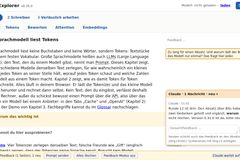
I talk to my texts now
Claude Code built a feedback mode for my Token Explorer: a text box next to every paragraph, a chat window, and one click that posts my notes to a local server which wakes Claude Code. We ran 18 small rounds on the first day, and the site the participants get contains none of it.
Artikel lesen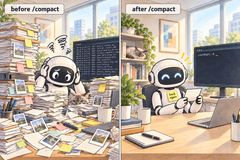
My coding agent just put itself to sleep
Claude Code compacts its context on its own only when the window runs full. Inside Herdr it typed /compact into its own terminal pane, picked the moment itself, and came back saying 'back again'.
Artikel lesen
My repo needs five more stars
The Semantic Anchors repo sits at 495 GitHub stars. At 500 it qualifies for Chip Huyen's Good AI List, so five clicks put more than 230 anchors into an index many people use to find AI tooling.
Artikel lesen
My software factory runs on a Raspberry Pi
I write an issue in Forgejo on a Pi 5. A watcher wakes a Claude Code orchestrator, worker sessions come back with a pull request, and only I can merge to main. I haven't opened a terminal for these projects since.
Artikel lesen
The handbag, part 2: now with numbers
A study of more than 16,000 coding-agent sessions shows the agent picks your database, payment provider and auth. Stripe, Neon, or a homegrown module nobody chose. Write your architecture down before the agent starts.
Artikel lesen
Fallbacks nach Recovery Time ordnen, nicht nach Bequemlichkeit
Als Fallback gewählt wird der Laden, der samstags um 13 Uhr schließt, statt der Packstation um die Ecke. Diesen Fehler sehe ich in Architektur-Reviews oft: Die Fallback-Reihenfolge richtet sich nach der Bequemlichkeit des Aufrufers, nicht nach der Recovery Time des Empfängers.
Artikel lesen
Ein Arcade-Automat aus einem Satz
Uwe Frankes Agent macht aus einem Satz ein Klemmbaustein-Modell samt Bauanleitung. In Frankfurt habe ich live zugesehen: 35 Schritte, 281 Teile. Entscheidend ist, dass der Agent sein eigenes Ergebnis prüft und nachbessert.
Artikel lesen
A Plastic Toy Drawing Robot Taught Me What GenAI Can Do
My vacation project: a 3D printed drawing robot with an LLM on top. Claude built the simulator, designed every part in OpenSCAD, planned the fit test and watched the print through my webcams. I ran the printer and made the calls.
Artikel lesen
Heresy: The Opposite of a Semantic Anchor
Steve Yegge calls them heresies: wrong beliefs that live in your docs and code, and that every new agent reads back in. They use the same mechanism as Semantic Anchors, pointed the other way. A fresh session doesn't cure them.
Artikel lesen
Dark Factory: My Talk, Retold by Two People Who Don't Exist
I handed my slides and transcript to Claude Code and let it write a dialogue: Martin tells Lena over coffee what my German talk was about, now in English with its own script and slides. The core idea: whether a dark factory makes sense is decided by the risk class of your software.
Artikel lesen
200 Semantic Anchors, and Two Changed Names
The Semantic Anchors catalog reached 200 anchors. Every community proposal runs through the Anchor Prior Test, and two of the last four came out with a different name: CERC is now spelled out, and the Boy Scout Rule lost its Uncle Bob qualifier.
Artikel lesen
There was never a license to ask for
Copyright protects the form, never the knowledge, so there was never a license to ask for. What AI-generated work actually loses is the footnote, and the small voices lose it first.
Artikel lesen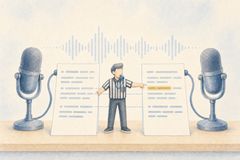
Whisper wasn't the problem, my settings were: eight transcription models compared
Eight transcription models compared, five via API and three local. Whisper's bad results came from its settings, not the model, and a two-witness pipeline with a referee keeps the workflow independent of any single vendor.
Artikel lesen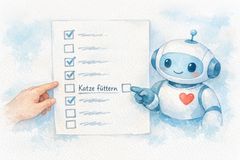
My to-do list is a text file, and my AI reads it too
For years my to-do list moved into a new app every six months. Now it is a plain markdown file in git that my AI reads and writes too. Here is the TODO.md format I use, the est/30-minute/MoSCoW conventions on top of it, and the prompts to set the same thing up with your own assistant.
Artikel lesen
autoCompactWindow: keep Claude Code's context lean and cheap
Claude Code made the 1M context window the default, but you can set the point where it compacts yourself. The setting is called autoCompactWindow, reachable through /autocompact, and almost nobody knows about it. Why setting it well below 1M saves cost and keeps answer quality up.
Artikel lesen
LinkedIn Shipped the Voight-Kampff Test as a Menu Item
LinkedIn added a "Seems like AI slop" button under every post. It cannot detect AI, so it is really a boredom detector wearing an AI costume. Why that is fine for anyone who writes with AI and still means every word.
Artikel lesen
Your LLM Holds a Whole Library. You Are Shown One Shelf.
An LLM understands hundreds of languages equally well, yet on your question it hands you back only the world that matches your own language. A five-language experiment shows the bias sits in the raw generation, not only in search, and depends on the topic.
Artikel lesen
Four Kinds of Hard: Building an AI PowerPoint Generator
I built a PowerPoint generator an AI drives through python-pptx. The interesting part was cataloguing what stays hard, and noticing that "hard" comes in four different flavors. A bigger model fixes almost none of them.
Artikel lesen
Three Days. I Did Not Type a Single Line of Code.
Three days. 158 commits. 44 pull requests merged. I did not type a single line of code. What a weekend on docToolchain main-4.x looked like when the bottleneck stopped being typing — and what it means for unpaid, single-maintainer open source.
Artikel lesen
Same Prompt, New Image Model: Switching to gpt-image-2
Same prompt, same references, same character description. The only variable was the image model. Top row gpt-image-1.5, bottom row gpt-image-2. Character consistency caught up, composition got more deliberate, and I switched the default in my image-generation skill.
Artikel lesen
An Anchor Delivers Only as Far as the Prior Reaches
A pull request asked why our anchor still points at Cockburn instead of newer Use-Case 2.0 and 3.0. We turned it into an experiment. The result was Claude Haiku confidently printing a "Use-Case 3.0" document whose body was pure Cockburn from 2001. No error, no hedge. This is the failure mode no one notices.
Artikel lesen
Trust Is Good, Verification Is Better
Most agentic coding rests on trust. The harness is what turns "it ran" into "I will deploy this". This is the full inventory of layers, what each catches, and what no harness can.
Artikel lesen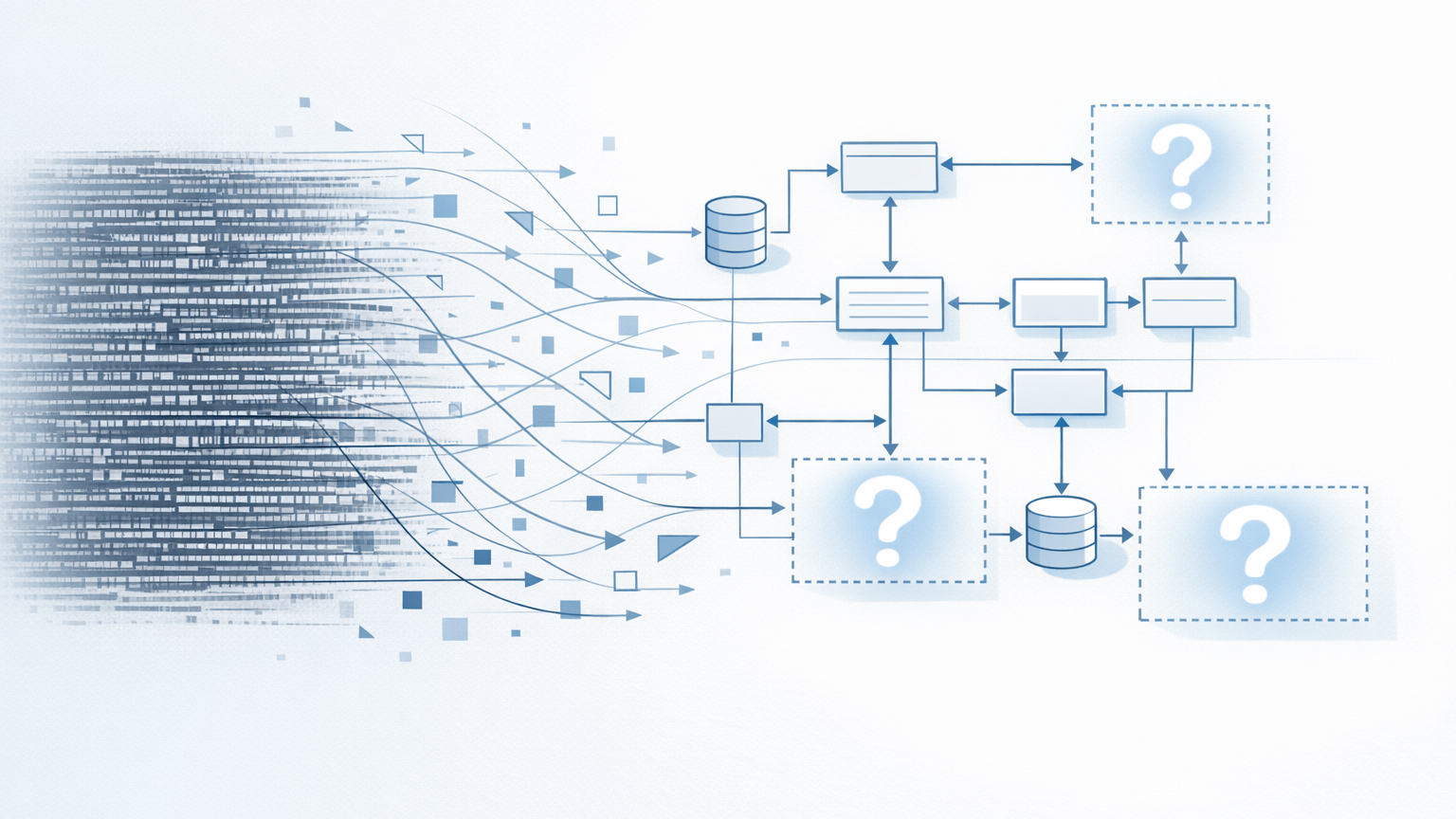
From Legacy Code to Spec: A Socratic Code-Theory Recovery Walkthrough
A hands-on walkthrough of Socratic Code-Theory Recovery: recover the spec and architecture of an undocumented 43,000-line codebase, mark precisely what only a human can answer, and verify the result with independent reviews.
Artikel lesen
My AI Improved Its Own Process
An LLM reconstructed the docs of a 43,000-line codebase. When the verification failed, the fix was not a better prompt. The AI rewrote the rules it works by. A correction loop, not a prompt.
Artikel lesen
Socratic Code-Theory Recovery: A Method for LLM-Assisted Brownfield Onboarding
How to recover the theory behind an existing codebase using an LLM as a structured Socratic interlocutor. Positioned against ArchAgent, Reversa, SoHF, and the Naur debate, with fact-checked references.
Artikel lesen
Six Months of Semantic Anchors
Six months in, the catalog has 147 entries and the community is now writing more anchors than I am. That was the plan.
Artikel lesen
Choose Your Language, Choose Your Channel Capacity
Go and Rust produce correct AI-generated code faster than JavaScript. Not because they are better languages, but because they have thicker error correction.
Artikel lesen
Unscharfe Fotos? Wer hat eigentlich erlaubt, dass die KI urteilt?
Google Photos schlägt vor, unscharfe Fotos zu löschen. Solange die KI beschreibt, fühlt es sich harmlos an. Aber jetzt urteilt sie.
Artikel lesen
The Correction Radius: When to Stop the Feedback Loop
Your feedback loop has a correction radius. Beyond it, the agent just makes things worse. Small steps are not caution, they are information theory.
Artikel lesen
Docs-as-Code Is Now AI Infrastructure
Your LLM assistant starts every session like a new colleague on their first day. Docs-as-Code is no longer a convenience. It is infrastructure. Bausteinsicht is now open source.
Artikel lesen
5 Blind Spots in Coding LLMs
Deprecated APIs, domain gaps, cross-file failures, and the meta-gap. What AI-generated tube radios teach us about AI-generated code.
Artikel lesen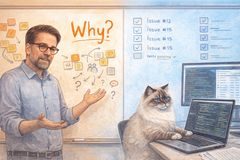
Purpose vs. Task: Where the Human-Machine Boundary Actually Sits
The LLM does not know why you are building this. Purpose vs. Task: the human-machine boundary is not in the code, it is in the question why.
Artikel lesen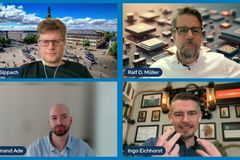
Agentic Coding vs. CNC Fräsen
Panel-Diskussion bei betterCode Modern Architecture 2026: CNC-Analogie, Senior/Junior-Produktivität mit KI und autonome Agenten — mit Ingo Eichhorst und Ferdinand Adé.
Artikel lesen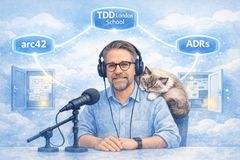
Agentic Coding mit Magic Spells: Semantic Anchors
Semantic Anchors sind Begriffe, die Wissensinseln in LLMs aktivieren. "TDD London School" ersetzt 150 Zeilen Prompt — und ist wartbar. Zu Gast beim HMZE Beyond Vibe Coding Podcast.
Artikel lesen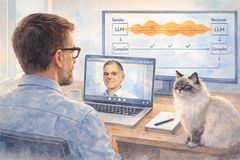
Your Compiler Is Shannon's Noiseless Channel
The compiler is Shannon's noiseless channel. Language modifiers like private and final are error correction for LLMs, not just human discipline.
Artikel lesen
Your chatbot can run rm -rf. Your linter has no idea.
The Vibe-Coding Risk Radar now has an LLM Runtime Integration modifier. Build-time and runtime risks live in different dimensions.
Artikel lesen
I DID it!
Replacing Zoom with a European alternative. A systematic Pugh matrix comparison of 7 video conferencing tools.
Artikel lesen
I Inventoried My Entire Apartment with AI
Photo-based inventory with Claude Code: AI recognizes books, games and objects from shelf photos, including vertical spine text.
Artikel lesen
The Agent Made Itself Obsolete. That Was Its Best Work.
I produced 32 videos with AI. The agent's best contribution was making itself obsolete by building a fixed workflow.
Artikel lesen
Semantic Contracts: When Anchors Are Not Enough
12 Contracts that cover a complete development workflow. Download them into your AGENTS.md.
Artikel lesen
Your LLM Will Be Deprecated. What's Your Test Plan?
We built a deterministic evaluation framework for Semantic Anchors. 193 questions, 63 anchors, under $25. No LLM judges another LLM.
Artikel lesen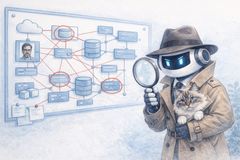
Review the Review: Mini ATAM with a Coding Agent
I asked my coding agent to review its own architecture against quality scenarios. It found three problems I had missed. Mini ATAM with AI.
Artikel lesen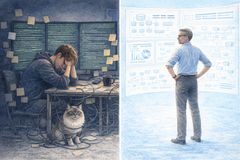
arc42: My Cockpit for AI-Generated Code
We spent 30 years begging developers to write documentation. Now AI writes it for free. And we're still staring at the code. arc42 as verification instrument for AI-generated code.
Artikel lesen
Closed Loop vs. Open Loop: Why the Feedback Loop Is Everything
Prompting ist offener Regelkreis. Agentic Coding ist geschlossener Regelkreis. Bessere Tests schlagen bessere Prompts.
Artikel lesen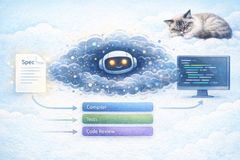
Eichhorst's Principle: Shannon's Noisy Channel Applied to LLM Coding
Ein LLM ist ein verrauschter Kanal. Compiler, Tests und Code Review sind die Fehlerkorrektur. Shannon erklärt, warum Agentic Coding funktioniert.
Artikel lesen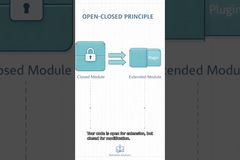
SOLID: Semantic Anchors Video Series Episode 2
SOLID als Semantic Anchor: Wie fünf Buchstaben ein ganzes Architekturparadigma in LLMs aktivieren.
Artikel lesen
Vibe Coding Risk Radar: First Community Contribution
Erster Community-Beitrag zum Vibe-Coding Risk Radar: Maria Virk ergänzt das Framework um neue Perspektiven.
Artikel lesen
Show Me the Code: Spec-Driven Development with AI
Spec-Driven Development: PRD, Architektur, Tests, dann Code. Der Workflow für produktionsreife AI-generierte Software.
Artikel lesen
Semantic Contracts: Private vs. Public Knowledge
Semantic Contracts erweitern Semantic Anchors um projektspezifisches Wissen. AGENTS.md als Vertrag zwischen Mensch und AI.
Artikel lesen
Semantic Anchors Video Series
Neue Video-Serie zu Semantic Anchors: Konzept, Anwendung, Katalog. Auf YouTube und der Semantic Anchors Website.
Artikel lesen
The IDE Is Dead
Die klassische IDE verliert ihre Relevanz. AI-Agenten brauchen keine GUI, sie brauchen CLI-Tools und Feedback-Loops.
Artikel lesen
Vacuum Cleaner Philosophy: Duck Typing in Real Life
Was Staubsauger-Philosophie mit Duck Typing zu tun hat: Wenn es funktioniert, ist es richtig.
Artikel lesen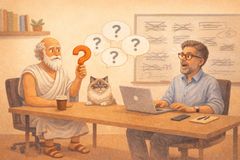
Socratic Method as a Semantic Anchor
Die Sokratische Methode als Semantic Anchor: LLMs stellen bessere Fragen statt vorschnelle Antworten zu geben.
Artikel lesen
Bausteinsicht: Architecture as Code with draw.io
Architektur-Diagramme als Code in draw.io: Versionierbar, diffbar, automatisiert generierbar.
Artikel lesen
200 Stars on GitHub in 10 Days
Semantic Anchors erreicht 200 GitHub-Stars in 10 Tagen. Was funktioniert hat und warum.
Artikel lesen
200-Line Prompt vs. 5 Words: Why Semantic Anchors Win
Ein 200-Zeilen System-Prompt vs. fünf Wörter mit Semantic Anchors. Weniger ist mehr, wenn die Anker stimmen.
Artikel lesen
devcontainer exec claude
Claude Code in einem DevContainer ausführen: Reproduzierbare, isolierte Entwicklungsumgebung für AI-Coding.
Artikel lesen
Documentation-as-Code Training with Socreatory
Neues Docs-as-Code Training bei Socreatory: arc42, AsciiDoc, docToolchain, CI/CD-Pipelines für Dokumentation.
Artikel lesen
Risk Radar Skills: The Automation Layer
Claude Code Skills automatisieren den Vibe-Coding Risk Radar Workflow: Risikobewertung direkt im Entwicklungsprozess.
Artikel lesen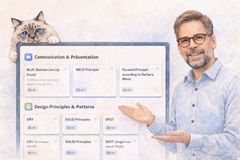
Semantic Anchors Goes Interactive
Die Semantic Anchors Website ist jetzt eine interaktive Web-App mit Suche, Filtern und Qualitätsbewertung.
Artikel lesen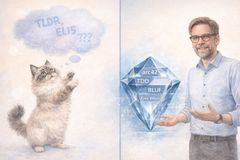
Is TLDR a Semantic Anchor?
TLDR als Semantic Anchor getestet: Aktiviert es zuverlässig dasselbe Verhalten in verschiedenen LLMs?
Artikel lesen
9 Hours, 65 Images: What I Learned About AI Image Generation
Ein Abend mit der OpenAI API: 65 Bilder generiert, Stile verglichen, Charakter-Konsistenz getestet. Was funktioniert, was nicht.
Artikel lesen
Vibe-Coding Risk Radar: MECE Risk Framework for AI-Generated Code
5 Dimensionen, 4 Tiers, konkrete Mitigationsmaßnahmen. Ein Framework zur Risikobewertung von KI-generiertem Code.
Artikel lesen
Your Code Is Worthless: What Actually Protects Your Business in the AI Age
AI kann 80% Deines sorgfältig gehüteten Codes in Tagen nachbauen. Was schützt Dein Geschäft wirklich? Network Effects, proprietäre Daten, operative Exzellenz und Kundenvertrauen.
Artikel lesen
Can a Raspberry Pi 5 run a local LLM for coding assistance?
Experiment: Kann ein Raspberry Pi 5 lokale LLMs für Coding-Assistenz ausführen? Der Showstopper: 11.000 Token System-Prompt bei 5 tok/s = mehrere Minuten nur für den Input.
Artikel lesen
docToolchain rb - Documentation reborn for the AI age
Nach 8 Jahren Docs-as-Code: Dokumentation muss jetzt zwei Zielgruppen bedienen - Menschen UND KI-Systeme. Die Frage ist nicht mehr 'Wie schreiben wir Docs?' sondern 'Wie wird KI unsere Docs lesen?'
Artikel lesen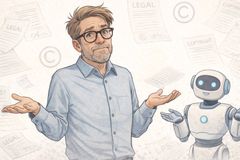
No Person, No Rights, No Responsibility: Why AI Contributors Break Our License System
KI kann rechtlich nichts besitzen. Copyright erfordert menschliche Urheberschaft. Wenn niemand den Code besitzt, bricht das gesamte Lizenz-Framework zusammen.
Artikel lesen
5 LLMs tested the new tool. Their verdict is clear.
dacli: Ein CLI-Tool das LLMs strukturierten Zugang zu Dokumentation gibt - wie LSP für Code. Hierarchische Navigation, Relevanz-Suche, programmatische Bearbeitung.
Artikel lesen
New Semantic Anchor: Pyramid Principle
Semantic Anchors für effiziente LLM-Kommunikation: Statt langer Erklärungen einfach 'Pyramid Principle' sagen - aktiviert sofort BLUF, SCQ, MECE und mehr.
Artikel lesen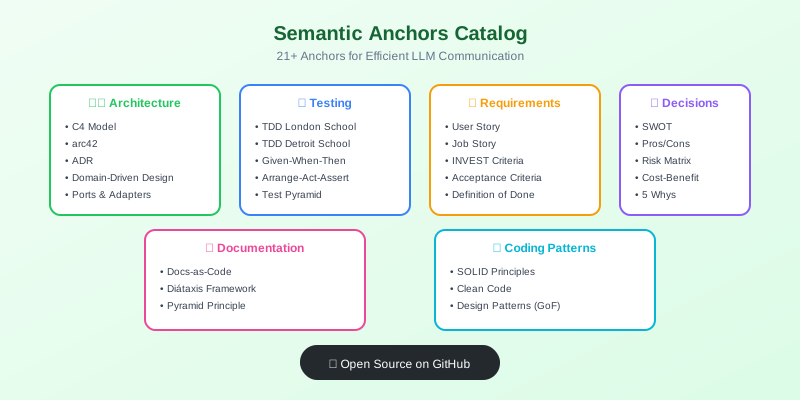
Semantic Anchors: Speaking the Same Language as LLMs
Katalog mit 21+ Semantic Anchors für Software-Architektur, Testing, Requirements, Entscheidungsfindung und Dokumentation. Open Source auf GitHub.
Artikel lesen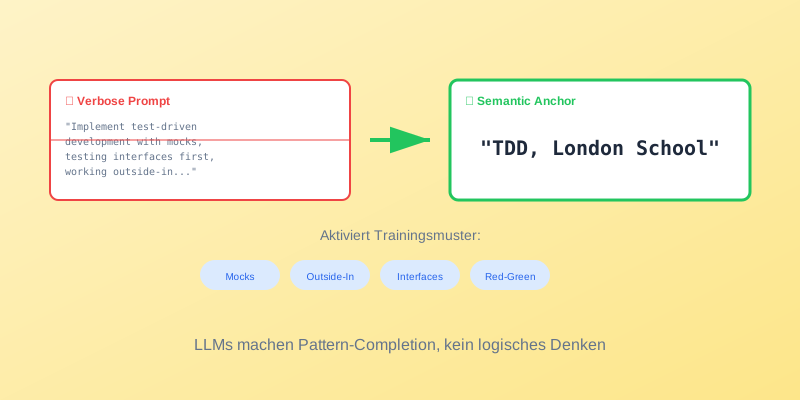
Semantische Anker: Warum 'TDD London School' besseren Code generiert als lange Erklärungen
LLMs machen Pattern-Completion, kein logisches Denken. Etablierte Begriffe wie 'TDD, London School' aktivieren relevante Trainingsmuster besser als lange Erklärungen.
Artikel lesen
LLMs sind nicht kreativ - sie kopieren nur!
Thomas Mann hat genau das gemacht, was wir LLMs vorwerfen: Erfahrungen und Geschichten intelligent neu kombiniert. Sollten wir Kreativität neu definieren?
Artikel lesen
KI vs. Entwickler - Eine andere Perspektive
'KI halluziniert heute wie verrückt' → 'Entwickler erzeugen Bugs wie verrückt'. Beide Systeme haben Grenzen und produzieren Fehler - warum akzeptieren wir das bei Menschen, aber nicht bei KI?
Artikel lesen
Meine alternative Sicht auf KI Modelle
Die Medien haben eine verschobene Sicht: Claude Sonnet übertrifft OpenAI für Software-Entwicklung. Mistral und Black Forest Labs führen Leaderboards an. Europa hat kompetitive KI-Fähigkeiten.
Artikel lesen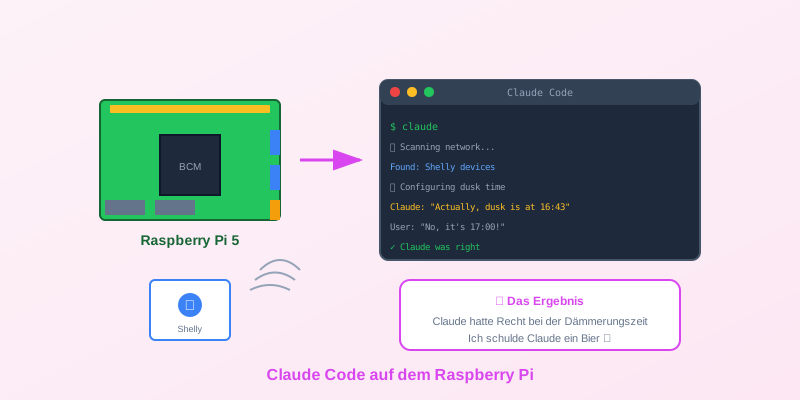
Claude Code auf dem Raspberry Pi
Claude Code auf dem Raspberry Pi installiert, Netzwerk gescannt, Shelly-Geräte gefunden. Dann eine Debatte über Dämmerungszeiten - Claude hat gewonnen. Ich schulde Claude ein Bier.
Artikel lesen